The circular transformation in plastic packaging has made high-purity post-consumer PET bottle bales, hot-washed rPET flakes, and rigid HDPE scrap essential industrial feedstocks. Achieving bottle-to-bottle food-grade approvals requires strict control of Intrinsic Viscosity (IV ≥ 0.78 dL/g), PVC contamination below 50 ppm, and moisture below 0.5%. Dash International connects international scrap collectors with state-of-the-art Turkish washing and compounding facilities.
1. Baled PET Bottle Grading: Clear vs Light Blue vs Colored
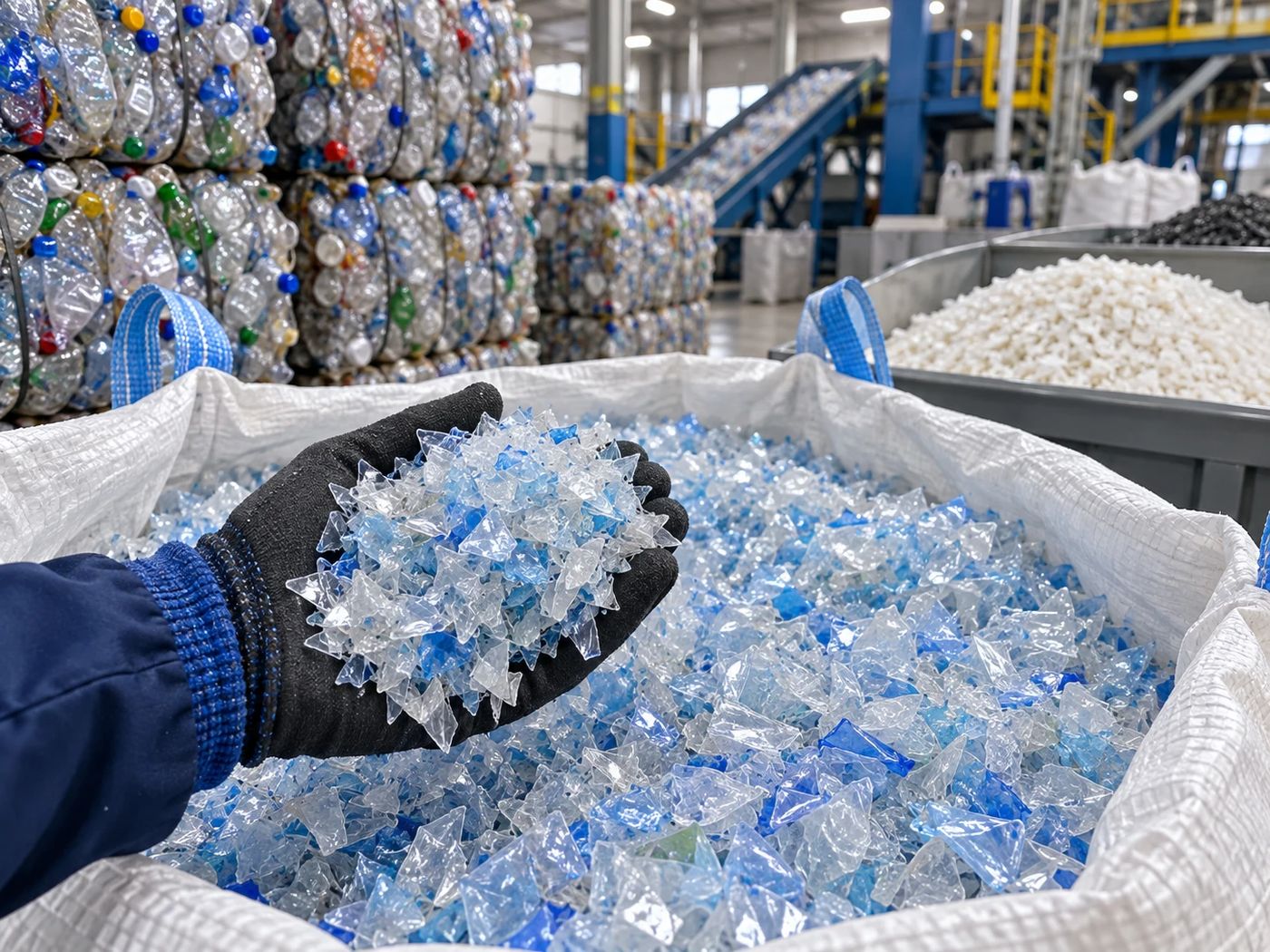
Post-consumer PET bottle bales are categorized into Clear (90%+ transparent water bottles with clear caps), Light Blue (up to 20% transparent blue beverage bottles), and Mixed Colored. Caps (HDPE/PP) and labels (PP/PET/PVC) are separated during float-sink washing tanks.
Bales compressed at 500+ kg/m³ with steel wire binding allow 22-24 metric tons per 40HC container. Bales must be free of motor oil, multi-layer pesticide bottles, and excessive road dirt.
2. Hot-Washed rPET Flakes Quality Metrics: IV, PVC and Color L* Values
Hot-washed clear rPET flakes are evaluated on three non-negotiable parameters: 1. Intrinsic Viscosity (IV): Target 0.78 - 0.84 dL/g (measured via Ubbelohde viscometer in phenol/tetrachloroethane). 2. PVC Contamination: Must not exceed 50 ppm; during extrusion, PVC releases hydrochloric acid which degrades polyester chains and corrodes injection molds. 3. Color L* Value: Target L* > 82 (brightness) and b* < 1.5 (yellowness) for optical clarity in new preform production.
3. Grading HDPE, LDPE Film and PP Scrap
Rigid HDPE scrap (drums, crates, bottles) is graded by colour, source and cleanliness: natural or single-colour material earns a better price than mixed colours. LDPE film scrap is sold as clear or coloured, agricultural or industrial film; the cleaner and drier the film, and the lower the share of other polymers, the higher the yield in the recycler's wash line. Woven PP bag and big-bag scrap should be free of residual product, metal and paper liners.
Ask for photographs of each bale and a written description of the source. Where possible, agree a tolerance for contamination and moisture in the contract, and make sure bales are strapped or wired so they hold together during handling.
4. Contamination and Moisture: What Recyclers Reject
Recyclers reject or downgrade bales with excess dirt, oil or chemical residues, food waste, mixed polymers, metals and free water. In film bales moisture is often the largest hidden weight: wet film can be paid at a lower weight or rejected, so check that loads are covered and bales are dry before loading.
For PET bottles specifically, PVC bottles, glass, metal and non-PET containers damage extrusion and are usually the reason for downgrades.
5. Regulation and Paperwork for Plastic Waste Trade
Plastic waste is controlled under the Basel Convention and national laws, and the rules for importing plastic scrap differ by country and change often. Some countries require import permits or restrict certain polymers. Before contracting, confirm the requirements of the destination country with the receiving company and a customs broker, and make sure the material description and tariff code on the documents match the cargo.
Standard documents include the commercial invoice, packing list, bill of lading, certificate of origin and, if requested, a pre-shipment inspection report.
6. From Bottle to Flake to Pellet: The Recycling Chain
Understanding the chain explains what buyers of scrap and flakes are really paying for. Each step removes contamination and adds value.
Collection and sorting: used bottles are collected, then sorted by polymer, and often by colour, removing anything that is not the target plastic. Baling: sorted bottles are pressed into dense bales for efficient transport.
Washing: at the recycler, bales are opened and the bottles are ground into flakes. Hot caustic washing removes labels, glue and residues, while a float-sink tank separates the PET flakes, which sink, from cap materials such as polypropylene and polyethylene, which float. Rinsing and drying complete the flake.
Optional upgrading: flakes can be melted, filtered and cut into pellets, which gives a more uniform material. For food-contact bottle-to-bottle use, further steps such as solid-state polycondensation raise the intrinsic viscosity and remove volatile substances. Each step needs clean input: the cleaner the bale, the higher the yield and the better the final quality.
7. Why Plastics Are Sorted by Type and Colour
Different plastics melt at different temperatures and cannot simply be mixed. A small amount of the wrong polymer can ruin a batch: for example PVC releases acid when heated and damages PET, and polyethylene in a PET stream leaves defects in the finished product. That is why strict sorting matters more than almost anything else in plastic scrap.
Colour also changes value. Clear PET can be used for the most demanding applications, including food packaging, and receives the highest price. Light blue is common for water bottles and can often be used with clear material in defined shares. Dark or mixed colours limit the end use to fibres or strapping because the colour cannot be removed.
For HDPE, natural (uncoloured) and single-colour material is worth more than mixed colours for the same reason. For LDPE film, clear film is preferred over coloured or printed film. When you buy, ask for the polymer, the colour and the share of other materials in writing, and confirm how it will be verified at loading.
8. Packing, Loading and Shipping Plastic Bales
Good packing protects both quality and weight. Bales should be pressed to a consistent density and tied with wire or strapping that holds during handling. Loose or collapsing bales waste container space and can burst.
Keep bales dry. Plastic itself does not absorb water, but bales can hold water between the pieces, especially films and bottles, and free water adds weight that is not material. Cover bales at origin, load in dry weather, and use containers with sound floors and door seals.
Load to the permitted payload without exceeding the road and terminal limits for the route. Take photographs of the empty container, each row, the closed doors and the seal, and record the bale count and weights. For long voyages avoid loading warm, freshly pressed bales that trap heat. On arrival, unload promptly and weigh on a certified scale so that any difference can be checked against the loading records.
9. Checklist: Buying Baled Plastic Scrap
Before you buy baled plastic, confirm the following:
1. The polymer, colour and form (bottles, rigid, film, woven) are written in the contract. 2. The maximum share of other polymers, labels, caps, metals, dirt and other contaminants is agreed. 3. Moisture and free water are addressed, especially for film. 4. Bale size, weight range and binding are defined. 5. Photographs of each bale row and the container are required at loading. 6. An independent inspection is arranged if the value justifies it. 7. You have checked the import rules of the destination country and the receiving company's permits. 8. The documents (invoice, packing list, bill of lading, certificate of origin) describe the material accurately. 9. Weight settlement and the claim procedure are written down.