
In high-volume beverage and edible oil bottling, packaging profitability hinges on Preform Weight Optimization (Lightweighting) and high-speed Stretch Blow Molding (SBM) runnability. Transitioning from legacy 28mm PCO 1810 (5.05g neck) to ultra-light PCO 1881 (3.74g neck) or 29/25 short water finishes cuts raw material consumption by 12-25% while maintaining top-load stacking strength. Dash International supplies high-precision PET preforms and closures sourced from trusted Turkish manufacturers.
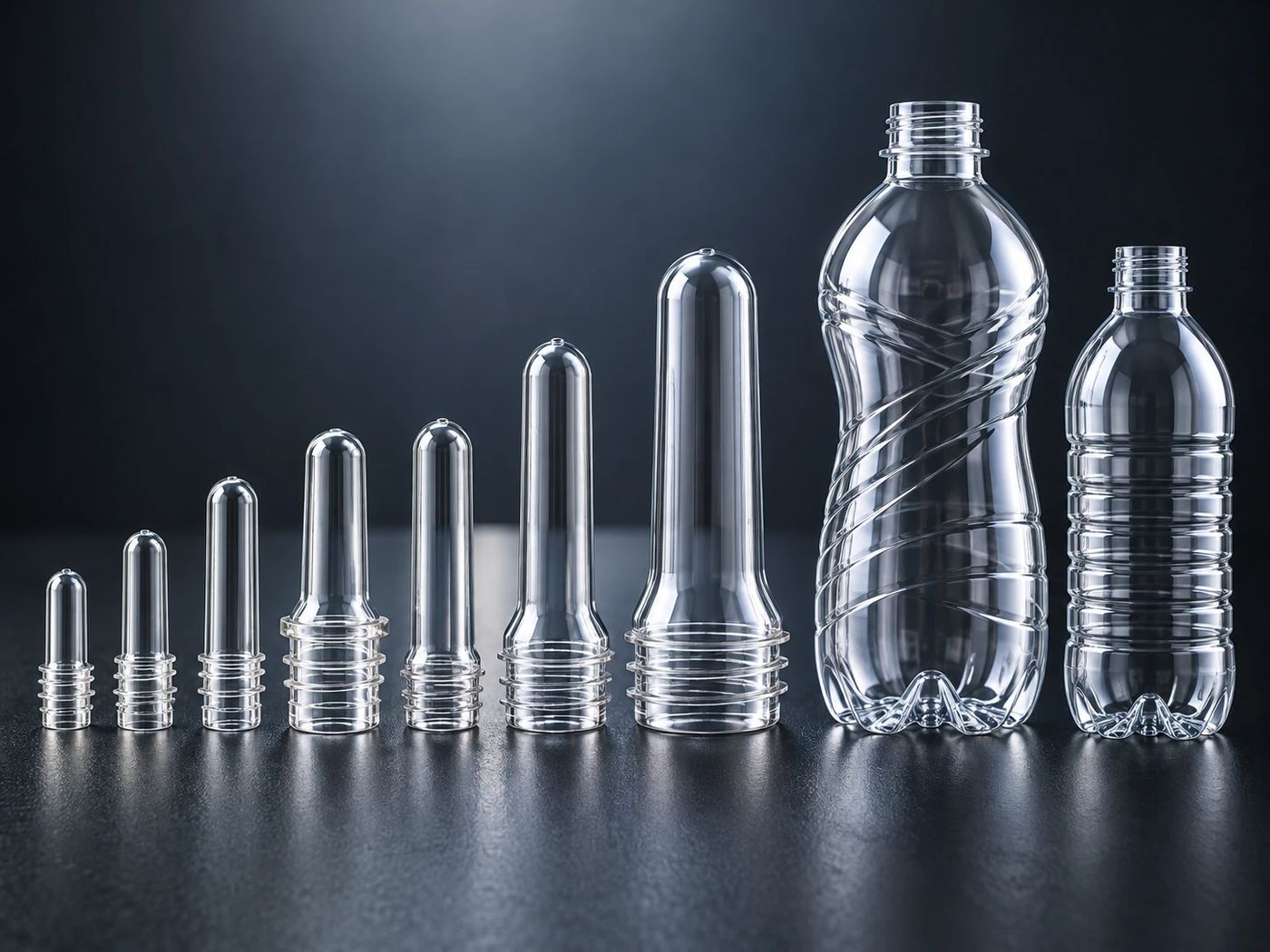
1. Neck Finish Standards: Beverage, Water, Oil & Jars
Selecting the right neck finish determines cap compatibility, capping line speed, and carbonation retention: - 28mm PCO 1881: The global standard for carbonated soft drinks (CSD) and sparkling water, supporting internal pressure up to 4.5 bar. - 30/25 & 29/25: Short, ultra-lightweight neck designs engineered specifically for still natural mineral water. - 38/33 & 48/41: Heavy-duty neck finishes with integrated drop-retention snap/screw closures for edible oil and condiments. - 63mm — 120mm Wide-Mouth: Cylindrical preforms for peanut butter, confectionery, pickles, and cosmetic jars. - 55mm Neck (up to 720g): Heavyweight preforms for 19-Liter (5-Gallon) water cooler carboys.
2. Stretch Blow Molding (SBM) Optimization: Heating Profiles & AA Control
During the stretch blow molding stage, preforms travel through infrared quartz heating ovens. Optimal wall thickness distribution requires independent zone heating: high heat at the base and shoulder, cooler temperature near the neck finish to prevent thread ovalization.
Acetaldehyde (AA) is a natural thermal degradation byproduct of PET. For mineral water, AA must remain strictly below 1.0 ppm to avoid sweet off-taste. Dash supplies preforms from Turkish manufacturers that use low-AA virgin resins.
3. Preform Specification Checklist for Buyers
Before ordering, define: the bottle type and volume; the preform weight in grams; the neck finish (for example PCO 1881, 30/25, 29/25 or 38/33) and thread standard; the preform colour and any tint; the resin type and intrinsic viscosity; the maximum acetaldehyde level for water and beverages; and the dimensions and tolerances your blow-moulding machine needs. Send a drawing or a sample if you have one.
Ask the supplier for the technical data sheet and for a trial quantity to run on your line before placing a full order: the real test of a preform is how it blows and fills on your machine.
4. Caps and Closures: Matching the Neck, the Product and the Line
A cap must match the neck standard exactly: thread, height and sealing surface. Tamper-evident bands, inner liners and induction seals are chosen according to what is being filled (still water, carbonated drinks, oil or hot-fill products) and to your capping machine's torque and speed.
Order preforms and closures together where possible, and validate the combination with leak, torque and drop tests on real filled bottles.
5. Lightweighting Limits, Packing and Storage
Reducing preform weight saves resin, but there is a limit: bottle strength, top-load and stacking must still meet your requirements, and very light designs need tighter process control. Test each weight reduction under real conditions before you commit to it.
Preforms are usually packed in octabins or cartons with liners. Store them dry and dust-free, away from direct sunlight and heat, keep the packaging closed, and use older lots first.
6. From Resin to Bottle: How a Preform Becomes a Bottle
A PET bottle is made in two stages, often at two different companies. In the first stage, PET resin is dried and melted and injected into a mould, producing a small thick-walled tube called a preform. The neck of the bottle, with its threads, is already formed at this stage and does not change afterwards.
In the second stage, the preform is heated to a controlled temperature with infrared lamps until it softens, placed into a bottle-shaped mould, stretched with a rod and blown with high-pressure air. The stretching and blowing orient the plastic molecules in two directions, which gives the finished bottle its strength and clarity.
Because the process is split, buyers of preforms judge them on how well they blow. Preform weight, wall thickness distribution, resin quality and dimensional accuracy all decide whether the blown bottle has even walls, good top-load strength and no defects. This is why a trial run on your own machine is the best test.
7. How to Read a Preform Specification
A preform specification looks technical but covers a few simple ideas.
Neck finish (for example 29/25, 30/25, 38/33 or 48/41): the standard of the threaded top. It must match the cap exactly, and the first number roughly describes the neck diameter in millimetres.
Weight (in grams): how much plastic is in the preform. It sets material cost and, together with the design, bottle strength. Lighter preforms save resin but leave less margin for strength.
Height and diameter: define how the preform fits your machine's heating and blowing stations.
Intrinsic viscosity (IV): a measure of the molecular weight of the resin. A higher IV generally means a stronger bottle but more demanding processing.
Acetaldehyde (AA): a small by-product formed during melting. For water and beverages it must be very low to avoid a taste transfer.
Colour and tint: clear, light blue, green or amber, according to the product and light-protection needs.
8. Common Preform and Bottle Defects and Their Causes
Knowing the typical defects helps you describe a problem precisely to your supplier and find the cause faster.
Haze or cloudiness: the plastic crystallised instead of staying clear, often because of slow cooling in the mould or wrong heating. Uneven walls: the preform was not heated evenly or does not suit the bottle design. Black or dark specks: contamination or resin degraded by overheating. Bubbles: moisture in the resin that was not dried well enough before melting. Gate defects: a rough or protruding point at the base of the preform, which can lead to weak or leaking bottle bases. Neck problems: out-of-round or damaged threads that prevent proper capping.
Most defects trace back to a few controllable factors: resin drying, melt temperature, cooling, mould condition and handling. When you report a defect, describe it, note the machine settings and keep samples from the affected lot so the cause can be traced.
9. Choosing a Preform by Application: Water, Carbonated, Oil and Hot-Fill
Each product puts different demands on the bottle, so the preform is chosen accordingly.
Still water: needs clarity, low acetaldehyde and light weight; short necks such as 29/25 and 30/25 are common because they save resin. Carbonated drinks: the bottle must withstand internal pressure, so the design, base shape and wall thickness are important and heavier preforms with a standard neck are common. Edible oil and sauces: bottles are often handled and stored for long periods, so strength and a secure closure matter; the neck must match a drip-free closure. Hot-fill products (juices and similar): the bottle is filled hot and needs to be heat-set so it does not shrink; this requires a suitable resin and mould process. Wide-mouth jars: larger necks for foods such as nuts, spreads and pickles. Five-gallon bottles: heavy preforms for reusable water bottles that must survive many refills.
When you request a quotation, describe the product, the filling temperature, whether it is carbonated, the shelf life and the storage conditions, and we will suggest the preform weight and neck that fit your line.