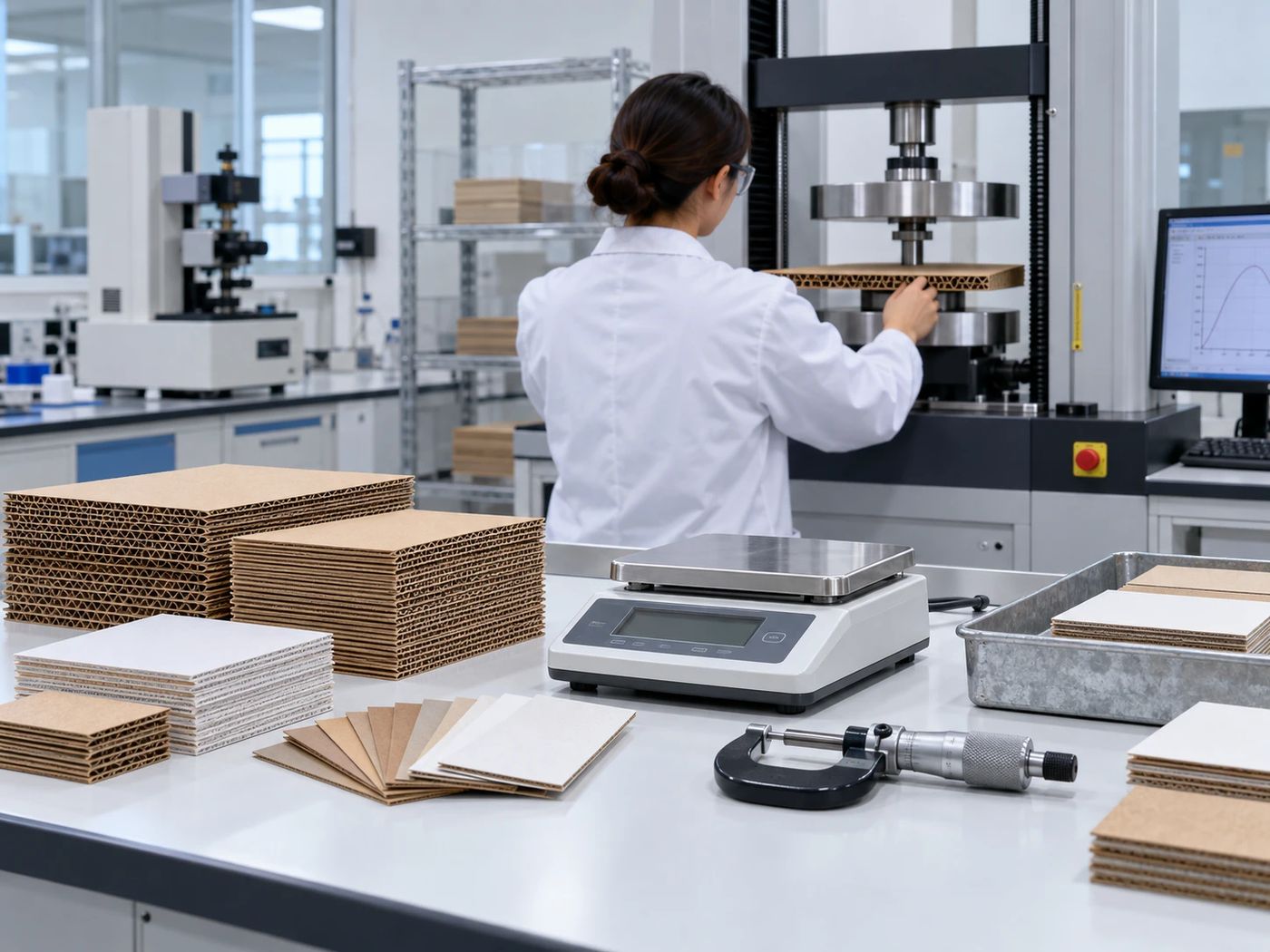
In international recovered paper trading, distinguishing between OCC 98/2 and OCC 95/5 is the primary determinant of mill processing yield, pulper energy consumption, and finished containerboard burst strength. With Turkish paper mills enforcing strict import compliance and moisture penalties above 12%, understanding European (EN 643 Grade 1.04/1.05) vs American (ISRI Grade 11/12) standards ensures predictable margins and zero port rejection.
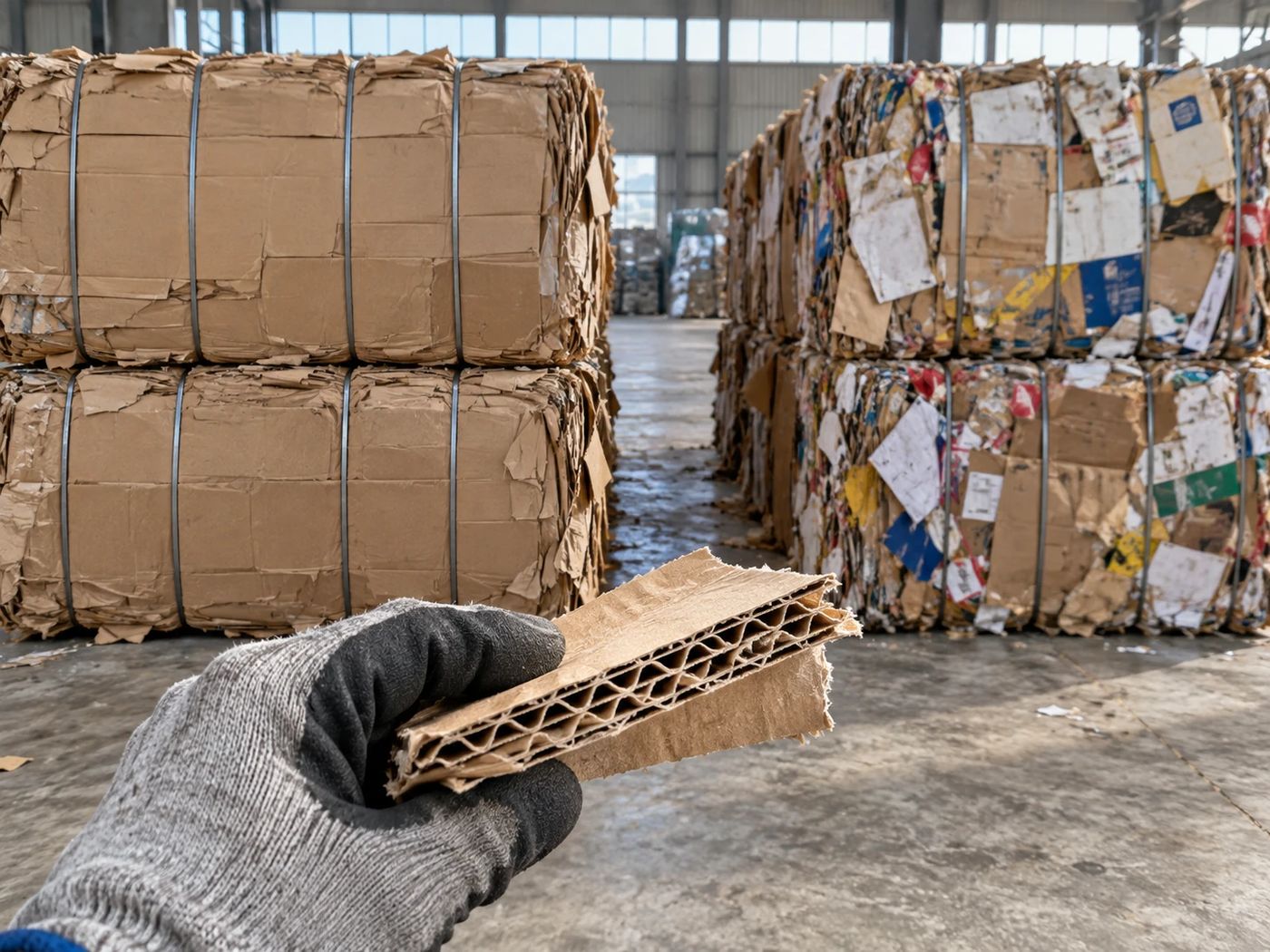
1. Defining OCC 98/2 vs OCC 95/5: Purity and Material Composition
Old Corrugated Containers (OCC) represent the backbone of global circular containerboard packaging. The commercial grade OCC 98/2 defines a bale composition containing a minimum of 98% clean corrugated cardboard with a maximum of 2% permissible non-corrugated paperboard or harmless outthrows. Prohibitive non-paper materials (plastics, styrofoam, metals, glass) must strictly not exceed 0.5%.
In contrast, OCC 95/5 permits up to 5% mixed papers, solid bleached sulfate (SBS) cartons, greyboard, or paper cores. While OCC 95/5 is commercially cheaper per metric ton, the loss during the wet-end pulping process rises significantly, and excess short mechanical fibers weaken the final burst factor (Burst Index) of the produced fluting or testliner.
Comparative Specification Matrix: OCC 98/2 vs OCC 95/5 vs DLK
| Technical Parameter | OCC 98/2 (Grade 1.05) | OCC 95/5 (Grade 1.04) | New Double Kraft (DLK 4.01) |
|---|---|---|---|
| Corrugated Content (%) | ≥ 98.0% | ≥ 95.0% | 100% Unprinted Kraft Cuttings |
| Max Non-Paper Prohibitives | ≤ 0.5% | ≤ 1.0% | ≤ 0.05% (Zero Plastic) |
| Standard Moisture Content | 10.0% — 12.0% Max | 10.0% — 12.0% Max | 8.0% — 10.0% Max |
| Pulping Fiber Yield | 92.0% — 94.0% | 87.0% — 89.0% | 97.0% — 98.5% |
| Virgin Kraft Fiber Share | 35% — 50% | 20% — 35% | ≥ 85% Long Virgin Fibers |
| Recommended Application | High-burst Testliner 2 & Fluting | Standard Recycled Fluting / Coreboard | High-Performance Kraftliner & Export Box |
2. Moisture Standards, Testing Protocols and Oven-Dry Formulas
Moisture content is the most frequent commercial dispute point in maritime paper scrap trading. Under international standards (EN 643 and ISRI Guidelines), standard commercial moisture for baled paper is contractual at 10% to 12%. Any moisture above 12% is systematically deducted from the invoice weight as water tare (moisture penalty).
Testing is conducted at mill gate arrival using multi-point electronic moisture probes inserted 30 cm into the core of random sample bales across the container payload. In cases of arbitration, the standardized Oven-Dry Method (ISO 287 / TAPPI T 412) is executed: core samples are weighed immediately (W1), dried in a ventilated oven at 105°C ± 2°C until reaching constant weight (W2), and moisture is calculated as: Moisture % = ((W1 - W2) / W1) * 100.
Moisture Climatization Alert in Sea Freight
Bales loaded in high-humidity origins (e.g. Gulf ports or Southeast Asia) can cause container sweat. Dash ensures all shipments are tightly baled at < 11% origin moisture with ventilated liner protection to prevent mold growth.
3. Commercial Pricing Dynamics & Net Fiber Cost for Turkish Paper Mills
When evaluating CIF Türkiye quotes for imported OCC, seasoned procurement directors do not judge by CIF price alone; they calculate the Effective Fiber Cost per Ton. As an illustrative example (not a price quote), if OCC 95/5 is priced at $160/MT CIF with 14% moisture and 12% reject loss, its real fiber cost reaches ~$211/MT. In contrast, premium OCC 98/2 priced at $175/MT CIF with 10.5% moisture and 6% reject loss yields an effective fiber cost of ~$208/MT, with lower pulping energy and less reject handling.
Dash International specializes in sourcing guaranteed OCC 98/2 and pristine DLK (Double Sorted Kraft) with rigorous pre-shipment inspection certificates, ensuring maximum yield and lowest lifecycle cost per ton of produced paper.
4. Trade Names vs. Official Grades: How to Write the Specification in Your Contract
"OCC 98/2" and "OCC 95/5" are market shorthand, not official grade names. The published standards, the European list EN 643 and the ISRI Scrap Specifications Circular, describe each grade by its composition and by the maximum share of unwanted material it may contain. Two traders can therefore mean slightly different things by the same label.
To avoid disputes, name the reference standard and grade in the contract (for example "OCC to EN 643, grade 1.05"), state the agreed limits for moisture and for non-paper and prohibitive materials, and say how and where sampling will be done. If the buyer's mill has its own written acceptance specification, attach it to the contract.
Practical rule
A limit that is not written into the contract will be argued about at the port. Put moisture, prohibitive materials and the inspection method in writing before the vessel is booked.
5. Working Out the Real Cost per Ton of Usable Fibre
The price per ton on the invoice is not what the mill really pays for fibre. The useful figure is the price divided by the share that becomes usable pulp after moisture and reject material are subtracted: effective fibre cost = CIF price ÷ [(1 − moisture) × (1 − reject loss)].
Illustrative example (not a price quote): a bale priced at 160 USD/MT with 14% moisture and 12% rejects costs about 211 USD per ton of usable fibre, while a cleaner bale at 175 USD/MT with 10.5% moisture and 6% rejects costs about 208 USD. The cheaper offer can therefore be the more expensive fibre. Add pulping energy, chemicals and the disposal cost of rejects to complete the comparison.
6. What OCC Is and Where It Comes From
OCC stands for Old Corrugated Containers: used cardboard boxes made of corrugated board, the familiar brown board with a wavy layer between two flat layers. After a box has done its job, it is collected, sorted, pressed into bales and sold to paper mills that turn the fibres into new paper.
Most OCC comes from two streams. The first is commercial: supermarkets, shops, warehouses and factories that receive goods in boxes and generate large, fairly clean volumes of cardboard. The second is household and municipal collection, where boxes are mixed with other paper and need more sorting. Commercial OCC is generally cleaner and easier to bale to a consistent standard, which is why buyers pay attention to the source.
Between the collection point and the mill there is a chain of steps: collection, sorting to remove plastics, metals and non-corrugated paper, baling, storage, loading into containers and shipping. Quality can be lost at every step, for example when bales are stored outside in the rain, so a good supplier controls the whole chain and not just the final bale.
7. How a Mill Turns OCC Into Paper
Understanding what happens inside the mill explains why buyers care so much about contamination and moisture. The bales are opened and fed into a pulper, a large tank where warm water and mechanical action separate the paper into individual fibres, producing a wet fibre suspension called pulp.
The pulp then goes through screens and cleaners. These remove everything that is not fibre: plastic film, staples, string, sand, and sticky materials from tapes and labels. Whatever is removed becomes reject, and the mill pays to dispose of it. After cleaning, the fibres may be refined to improve bonding, mixed with starch and other additives, and formed into a sheet on the paper machine, which presses and dries it into reels of testliner or fluting.
Two practical lessons follow. First, every percent of contamination costs the mill twice: once as lost weight and again as disposal and extra wear on equipment. Second, recycled fibres get slightly shorter and weaker each time they are recycled, so mills often blend in stronger fibre, such as virgin kraft or high-quality kraft cuttings (DLK), to keep the paper strong. This is why the fibre quality of the OCC you supply changes the price a mill is willing to pay.
8. Common Quality Problems and What Causes Them
Most disputes about OCC come from a short list of problems. Knowing what causes each one helps you prevent it.
Excess moisture: bales stored outside, loaded in rain, or pressed from wet material. It adds weight you pay for but the mill cannot use, and it can cause mould during a long sea voyage. Prevention: covered storage, dry loading and a written moisture limit.
Prohibitive materials: plastics, metals, glass, textiles, food waste and similar items that are not paper. They usually come from poor sorting at the source. Prevention: a clear written specification, supplier audits and photographs of the bales at loading.
Wet-strength and coated papers: some boxes, for example for frozen food, are treated to resist water and do not break down easily in the pulper. They create rejects and lower yield. Prevention: ask the supplier how they separate these boxes.
Mixed grades: bales that combine OCC with mixed paper, magazines or newspaper. They lower the strength of the finished paper. Prevention: a defined grade in the contract and supervised baling.
9. A Simple Checklist Before You Buy OCC
Use this list to make sure nothing important is left to chance:
1. Grade: the standard and grade name are written in the contract, for example an EN 643 grade, together with the limits you accept. 2. Moisture: the maximum percentage and the test method are agreed, and you know who pays for testing. 3. Contaminants: a maximum share of non-paper and prohibitive materials is written down. 4. Bales: the size, weight range and type of wire or strapping are defined. 5. Loading: you receive photographs of the empty container, each row of bales, the closed doors and the seal. 6. Inspection: an independent inspector is named and the sampling method is described. 7. Documents: commercial invoice, packing list, bill of lading and certificate of origin are reviewed by your customs broker before the vessel arrives. 8. Weight: it is clear which scale and which weight will be used to settle the invoice. 9. Claims: the deadline and the way to raise a claim are written in the contract.