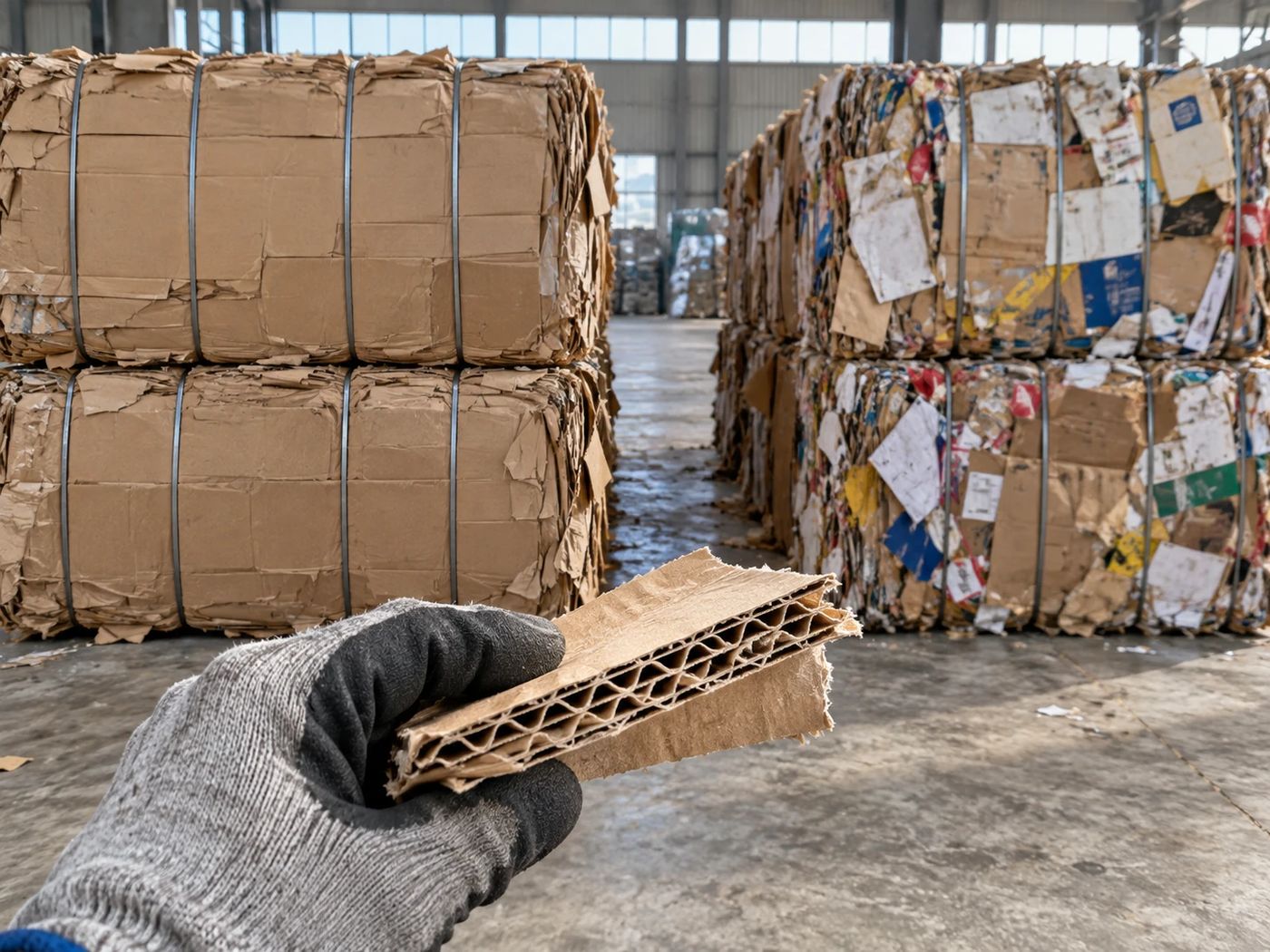
Türkiye is a natural source of containerboard for buyers around the Eastern Mediterranean, the Red Sea and the Gulf: mills produce testliner, fluting and kraftliner, container lines run regular services from the Turkish ports, and reels can be slit to the width your corrugator needs. This guide explains the decisions that matter most when you import directly: which Incoterm to choose, how to structure payment, which documents you will need and how to prepare a specification so that the quotation you receive is accurate.

1. Why Buyers in the Arab World Source Paper from Türkiye
Turkish mills sit close to the Eastern Mediterranean shipping lanes, so sea freight to Levant, North African, Red Sea and Gulf ports is a short, well-served trade. Mills offer the main containerboard grades (testliner, fluting, kraftliner and white-top liners) in a wide grammage range, and reels can be slit to the width and core size your line uses, which reduces trim waste.
Buying through a specialist trading company such as Dash International adds practical value: one contact for several mills, consolidation of different grades into a full container, help with specification and testing, and support in Arabic, Turkish and English.
2. Choosing the Incoterm: EXW, FOB, CFR or CIF
An Incoterm tells you who arranges and pays for transport and insurance, and where the risk passes from seller to buyer. For sea shipments of reels the four terms below are the most common. Under CFR and CIF the seller pays the sea freight to your port, but the risk still passes to you when the goods are loaded on the vessel, so insurance matters.
If you have your own freight forwarder and want control over the shipping line and rates, FOB is often the best choice. If you prefer a single delivered-to-port price and one party managing the booking, choose CFR or CIF.
Incoterms 2020 for Sea Shipments of Paper Reels
| Term | Who books sea freight | Who insures the cargo | Risk passes to the buyer | Best suited for |
|---|---|---|---|---|
| EXW (Ex Works) | Buyer | Buyer | When goods are made available at the seller's premises | Experienced buyers with their own forwarder in Türkiye |
| FOB (Free On Board) | Buyer | Buyer | When goods are on board at the Turkish port of loading | Buyers who want control of freight rates and the shipping line |
| CFR (Cost and Freight) | Seller | Buyer | When goods are on board at the Turkish port of loading | Buyers who want the seller to manage freight but arrange their own insurance |
| CIF (Cost, Insurance and Freight) | Seller | Seller (minimum cover) | When goods are on board at the Turkish port of loading | Buyers who want a single price delivered to their port |
3. Payment Terms: Letter of Credit, Bank Transfer and Documentary Collection
A confirmed irrevocable letter of credit at sight protects both sides: the seller is paid when the documents comply with the credit, and the buyer pays only against the agreed documents. It carries bank charges and requires documents to match the credit exactly, so agree the wording before the credit is opened. A bank transfer is simpler and cheaper; a common structure is an advance payment on order and the balance against copies of the shipping documents. Documentary collection is cheaper than a letter of credit but gives the seller less security.
For a first transaction between new partners, a letter of credit or an advance-and-balance transfer is the usual choice. Trusted, repeat customers may agree different terms. Always write the payment terms, currency and bank details into the sales contract.
4. The Shipping Documents You Will Need
The standard set is: the commercial invoice; the packing list with reel numbers, dimensions and weights; the bill of lading; a certificate of origin issued by the competent chamber; a quality or analysis certificate from the mill; the insurance certificate (for CIF sales); and an independent inspection report if it was agreed in the contract.
Some destinations also require chamber of commerce or consular legalisation of documents, and preferential origin documents may reduce duties under a trade agreement between Türkiye and your country. Rules differ and change, so confirm the exact requirements with your customs broker before the goods sail.
Check the documents before the vessel sails
Most delays at the destination port come from documents that are missing or do not match each other (names, weights, descriptions). Ask for draft copies first and let your broker review them.
5. Container Loading, Protection and Transit
Reels are usually loaded upright on their ends, wrapped and protected with edge boards, and blocked and braced so they cannot move during transit. A full container load is typically around 20 to 26 tons depending on reel width and diameter. Confirm the maximum gross weight allowed on the route, and use dry containers with sound floors and door seals.
Moisture is the main risk for paper. Good wrapping, dry dunnage and prompt unloading at destination protect the reels. Ask about free days at your port for demurrage and detention, and arrange trucking and unloading in advance so the container is not held at the terminal.
6. What to Send to Receive an Accurate Quotation
To get a fast and accurate quotation, send: the paper grade and grammage you need; reel widths and core diameter; the quantity per order and how often you buy; the destination port; the Incoterm and payment method you prefer; the delivery window; and the tests you expect on the certificate (for example burst index, Cobb60, SCT or CMT).
Send this information through our contact form or WhatsApp trade desk, and our team will confirm availability, the closest mill match and a delivered price. If you are unsure which grade fits your box, describe the box and its use, and we will suggest a construction.
7. Worked Example: Comparing an FOB Offer with a CIF Offer
Two quotations for the same paper rarely look alike because they include different things. The example below uses illustrative numbers only, to show how to compare them on the same basis.
Offer A is FOB Mersin at 600 USD per ton. Offer B is CIF Aqaba at 650 USD per ton. To compare, add the missing costs to Offer A: sea freight of 40 USD per ton, marine insurance of about 3 USD per ton, and origin-side handling that your forwarder charges of 5 USD per ton. Offer A then comes to about 648 USD per ton delivered to the same port as Offer B.
In this illustration the two are almost identical, so the decision depends on other factors: who controls the shipping schedule, how each party handles a delay, the free days at the port and how much you trust each quotation to be final. The lesson is to always convert offers to the same delivery point before deciding, and never compare a FOB price with a CIF price directly.
Also compare the paper itself, not only the price: grammage tolerance, width tolerance, test values and packaging can differ between offers, and a cheaper price may reflect a lower specification.
8. Risk Management: What Can Go Wrong and How to Reduce It
Most problems in an international paper purchase fall into a few categories. Planning for them costs little compared with fixing them later.
Quality risk: the paper does not match the specification. Reduce it with a written specification, a certificate for the lot, a trial order and on-arrival testing. Moisture and damage in transit: reels get wet or crushed. Reduce it with good wrapping, edge protection, blocking and bracing in the container, dry containers and photographs at loading. Payment risk: paying before receiving, or shipping before being paid. Reduce it with a letter of credit or a payment schedule tied to documents, and by checking the counterparty. Document risk: errors that delay customs clearance. Reduce it by having your broker review draft documents. Schedule risk: vessel delays or rolled bookings. Reduce it by booking early, keeping some buffer stock and agreeing what happens if shipping is delayed. Supply risk: relying on one mill. Reduce it by having a second qualified source for key grades.
9. A Typical Order Timeline From Inquiry to Delivery
Every order is different, but this sequence shows what to expect and where you can save time.
1. Inquiry: you send the grade, grammage, widths, core, quantity, destination and terms. 2. Quotation: the trade desk confirms availability with the mill and sends a delivered or FOB price with the specification. 3. Confirmation: you agree the price and terms, sign the sales contract and arrange payment (advance or letter of credit). 4. Production or allocation: the mill produces or allocates the reels and slits them to your widths. 5. Inspection and loading: reels are checked, wrapped and loaded, with photographs and, if agreed, an independent report. 6. Shipping: the container is booked and the vessel sails; you receive a copy of the bill of lading and the document set. 7. Arrival: the shipment reaches your port, the broker clears it and it is trucked to your plant. 8. Receiving: you count, weigh and test the reels and confirm acceptance. 9. Follow-up: you give feedback on the paper's performance so the next order can be fine-tuned.
Ask for realistic dates at the quotation stage, since production and shipping times vary by grade, season and route.